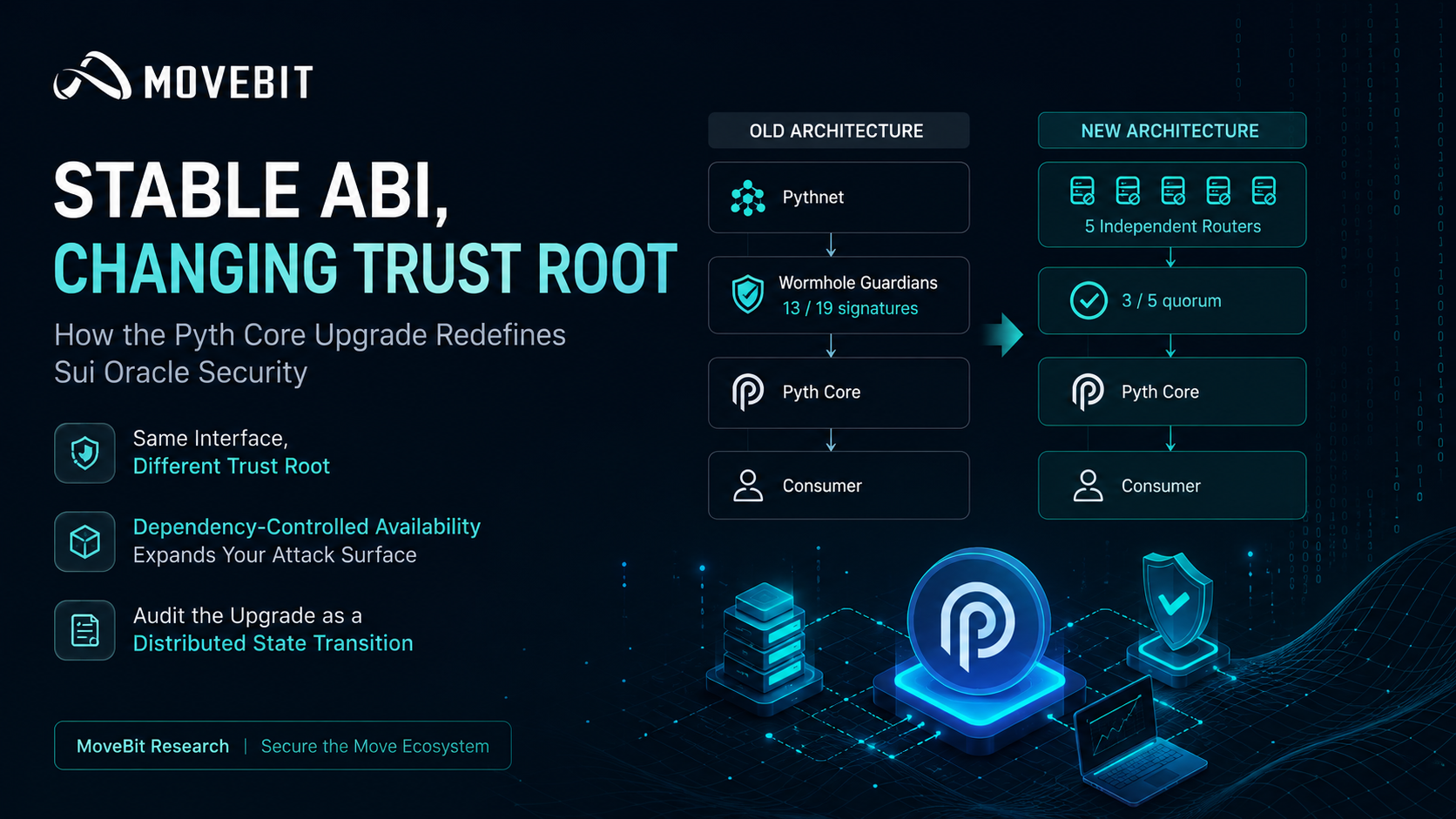
On August 26, Pyth Core introduced a major infrastructure upgrade. The new architecture preserves compatibility at the Hermes API and on-chain ABI layers, but the underlying verification model changes significantly: the previous path relied on Pythnet and a 13-of-19 Wormhole Guardian signature threshold, while the new design uses five independent routers with a 3-of-5 quorum.
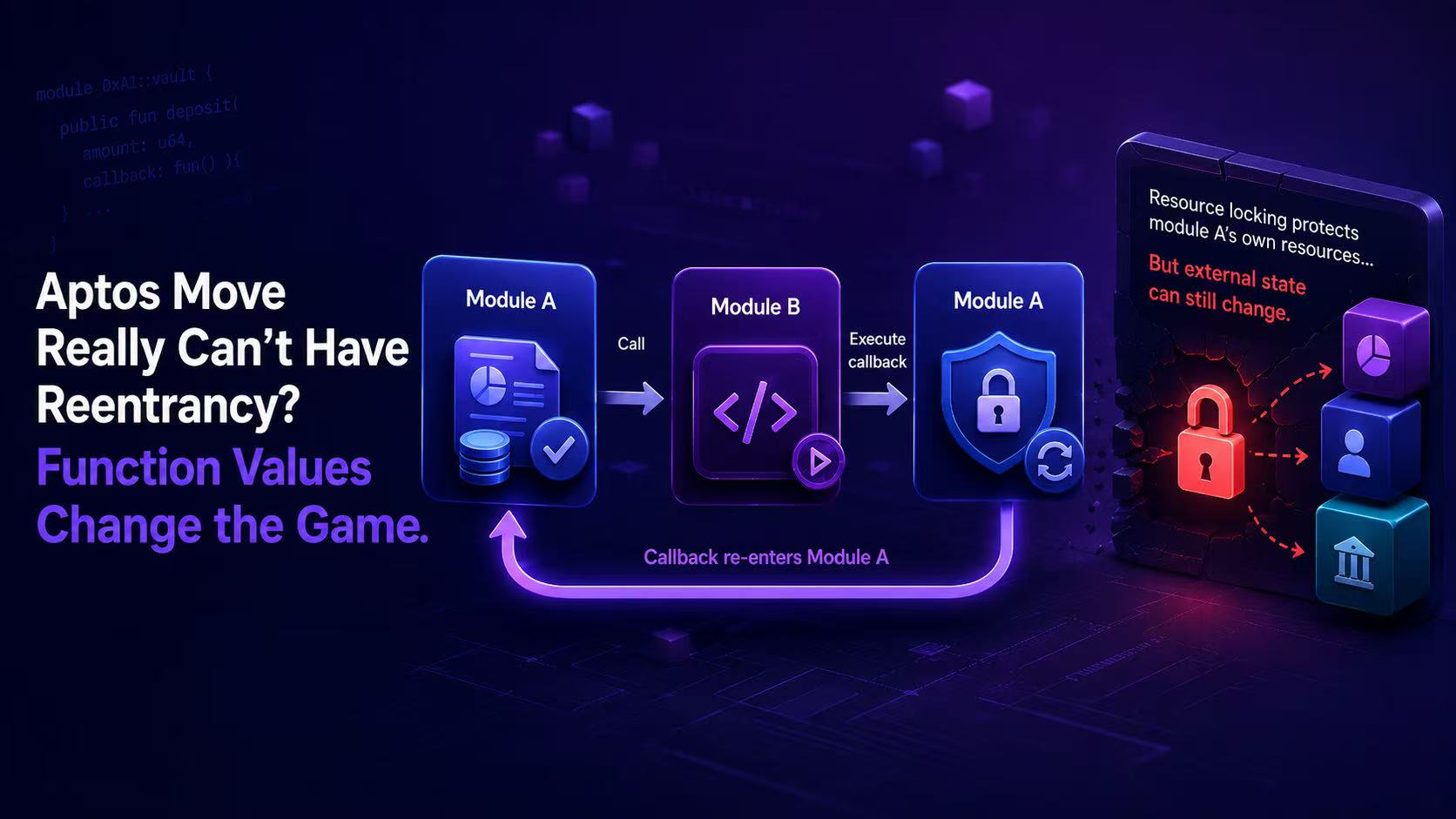
For a long time, many Move developers have operated under a simple assumption: reentrancy is primarily a Solidity problem, and Move largely avoids it by design.
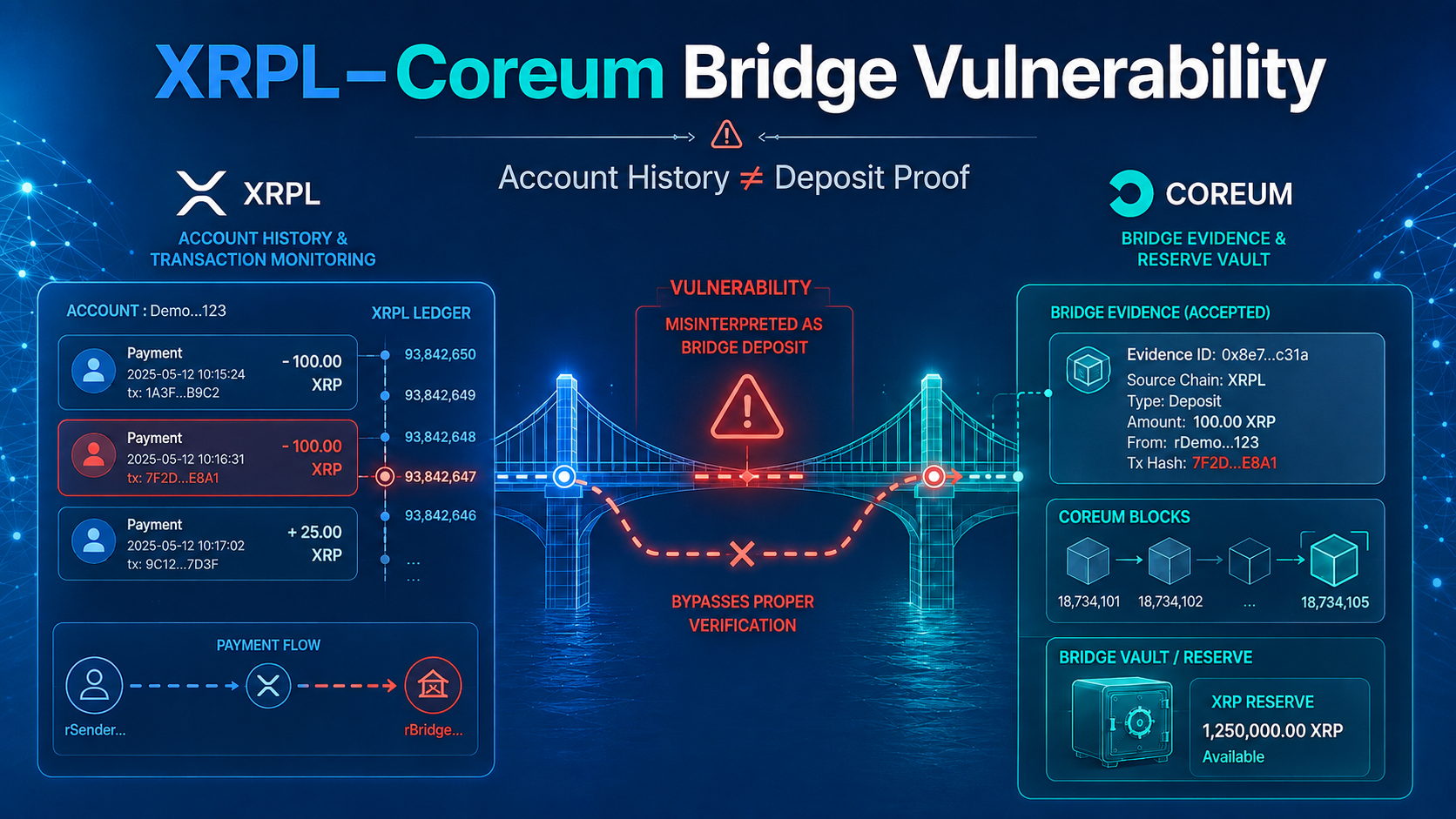
The issue in the XRPL–Coreum bridge incident appears straightforward: when identifying inbound XRPL transfers, the relayer failed to verify whether the Payment Destination was the bridge address.
When an AI Agent possesses system-level capabilities such as shell execution, file read/write, network requests, and scheduled tasks, it is no longer just a "chatbot"—it is an operator with real permissions. This means a single command triggered by prompt injection could delete critical data; a supply chain-poisoned Skill could quietly leak credentials; and an unverified business operation could cause irreversible loss.
As blockchain technology evolves, scalability and programmability remain critical challenges, particularly for blockchains using the UTXO model. Kaspa, a Layer 1 blockchain leveraging a BlockDAG structure, achieves high throughput but lacks native smart contract functionality, a limitation shared by other UTXO-based systems like Bitcoin. To address this, the Kaspa ecosystem has developed Kasplex L2, a Layer 2 solution designed to enable Ethereum Virtual Machine (EVM) compatible smart contracts through a based rollup architecture.
The Move programming language has brought disruptive changes to blockchain smart contracts with its unique resource management design, security-first architecture, and modular development model. Driven by these innovations, the emerging public blockchains have achieved high performance and scalability breakthroughs through technologies such as parallel execution, object-oriented design, and horizontal scaling. However, as the Move ecosystem expands, its security has also faced challenges in real-world applications.
MoveBit , a sub-brand of BitsLab, is a security team focused on the Move ecosystem, building the standard and delivering security audits for secure Move ecosystem.
An in-depth analysis of the security vulnerabilities found in Bluefin, a decentralized perpetual trading platform powered by the Sui blockchain. Discover issues like share manipulation, improper permission control, oracle price handling, and ownership transfer risks, along with proposed solutions to enhance platform security and reliability.
The Aptos Framework has continuously undergone rigorous testing and comprehensive auditing. To further increase the level of assurance, we have formally verified its security and correctness.
Welcome to MoveCTF 2024, an online security competition set to be a part of the 2024 Move Developer Conference. Organized by MoveBit, one of the earliest contributors to the Move ecosystem, in partnership with ChainFlag, MoveFuns, and OpenBuild, and exclusively sponsored and supported by the Sui Foundation, this event offers an immersive narrative experience for Move ecosystem developers.